
Food & Hospitality
Catering Web Design
Someone hiring a caterer may be planning their first event.
Someone hiring a caterer may be planning their first event. They know how many people are coming, but they may not know whether they need serving staff, equipment, or a particular setup. A good website gives them enough context to ask useful questions without making event planning feel like an exam.
Let the occasion lead the navigation
Create clear routes for the event types the caterer actually handles. An office lunch page can emphasize delivery and setup timing, while a celebration page may need more explanation of guest flow and meal service. Use examples to show the differences. Avoid publishing separate occasion pages that all repeat the same menu and contact button.
Describe the work around the food
Customers need to know who sets up, serves, clears, and coordinates with the venue. Explain available arrangements and identify decisions that require discussion. Images of a buffet layout or plated service can answer questions that a close-up food gallery cannot. Include practical context such as the type of event shown, using only work the business is entitled to share.
Build an inquiry that starts a conversation
Collect the date, location, guest estimate, occasion, and preferred meal style. An optional notes field can capture venue access, scheduling concerns, or questions the host does not know how to categorize. Explain how dietary requirements are discussed with the catering team. Keep the initial form focused; detailed event documents can come later through an appropriate channel.
Make planning expectations visible
Sample menus should say whether choices can change and whether they illustrate a service style or a complete package. The response message should explain that availability and event details still need review when that is the actual process. Do not make a successful form submission look like a secured event booking.
Before the site goes live, assemble menu examples, service descriptions, event photographs, and the team's usual discovery questions. Have someone unfamiliar with catering plan an inquiry from the pages alone. Notice the terms they hesitate over and replace them with clearer explanations.
Review completed inquiries alongside the number that become suitable conversations. Track missing event dates, unclear venues, and repeated setup questions. Those patterns identify where the website can do more preparatory work, helping the caterer spend less time uncovering basics and more time discussing the event itself.
A design concept for Catering
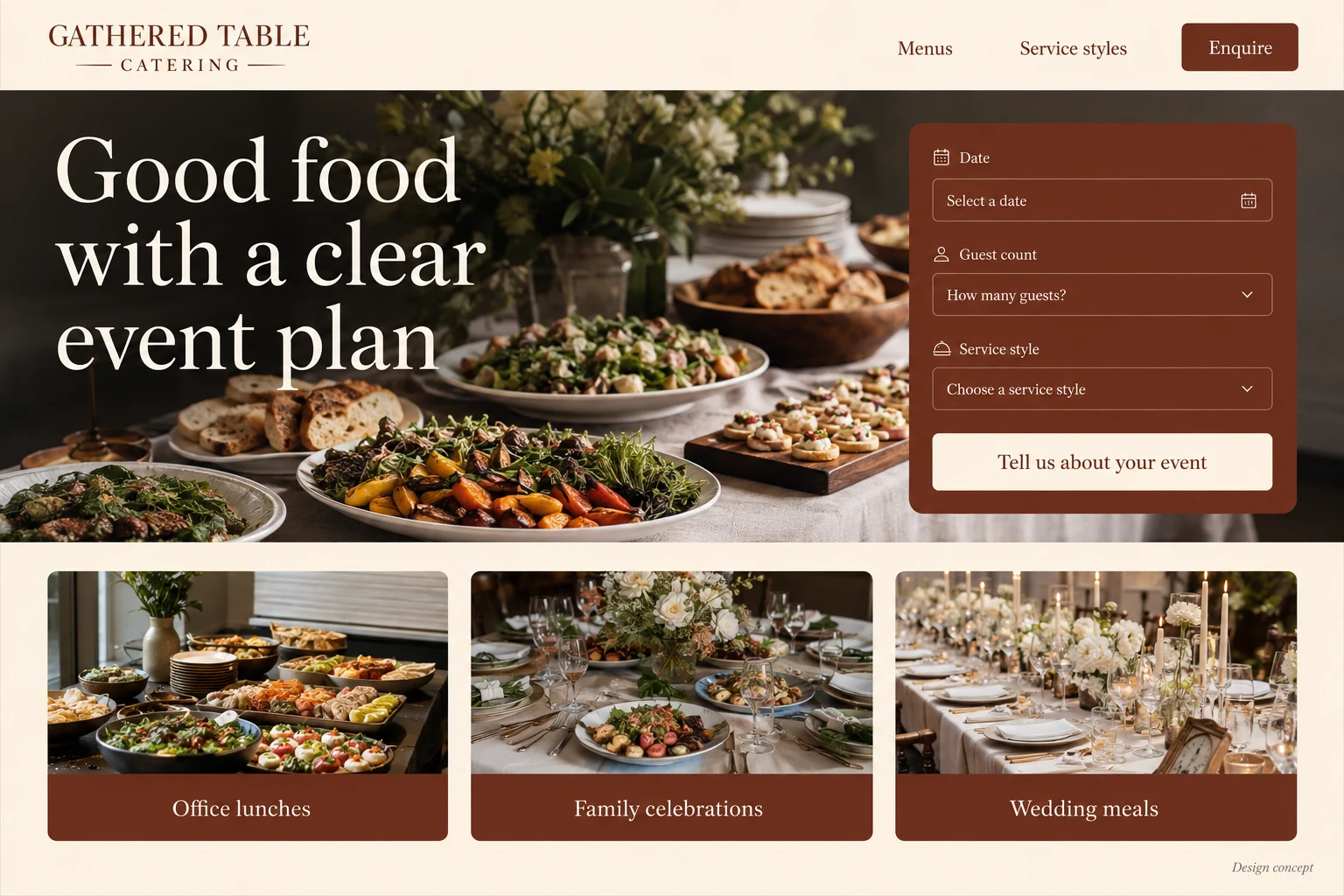
This AI-generated website concept illustrates a fictional business. It is not a completed customer project. Features shown here need to be discussed and scoped for your business.