
Food & Hospitality
Boutique Hotel Web Design
A guest may discover a boutique hotel through one striking photograph, but a reservation requires more than a mood.
A guest may discover a boutique hotel through one striking photograph, but a reservation requires more than a mood. They need to understand the room they are choosing, the location, and the practical shape of the stay. Build the site so each attractive image leads naturally to useful information.
Give room comparison a consistent structure
For every room type, show the sleeping arrangement, relevant facilities, layout notes, and real photographs. Keep the same comparison points in the same order. If rooms within a category differ, explain what is representative and what guests can request. A gallery that mixes every room together makes it harder to know what a booking includes.
Let the hotel's character come from evidence
Use actual reception, lounge, dining, and room photography rather than stock images that could belong anywhere. Short descriptions can explain design choices and the feel of shared spaces. Pair them with current operating details so visitors understand how those spaces fit into a stay. Do not turn a decorative feature into an implied service inclusion.
Remove uncertainty at the reservation handoff
The booking button should open the correct property and preserve the guest's choices where the system supports it. Check date entry, guest selection, and the return path from the booking provider. Keep inquiry wording distinct from a confirmed reservation. Guests should always know whether they are browsing, asking, or securing a stay.
Help travelers organize arrival
Put the address, entrance guidance, parking arrangements, and check-in information in a practical visit section. A neighborhood page can offer a few maintained suggestions, but it should not hide essential arrival details. Use accurate descriptions of nearby places and avoid fixed travel-time promises unless there is a reliable basis for them.
Before launch, gather room-category records, current policies, verified amenities, original photographs, and the booking workflow. Ask someone unfamiliar with the hotel to compare two rooms and explain what happens after pressing the main action.
Track availability searches and completed reservations where measurable, then examine questions about room differences or arrival. If visitors repeatedly ask whether a pictured feature comes with their room, improve the page's specificity. A distinctive website works best when it makes the hotel's actual offering easier to understand.
A design concept for Boutique Hotel
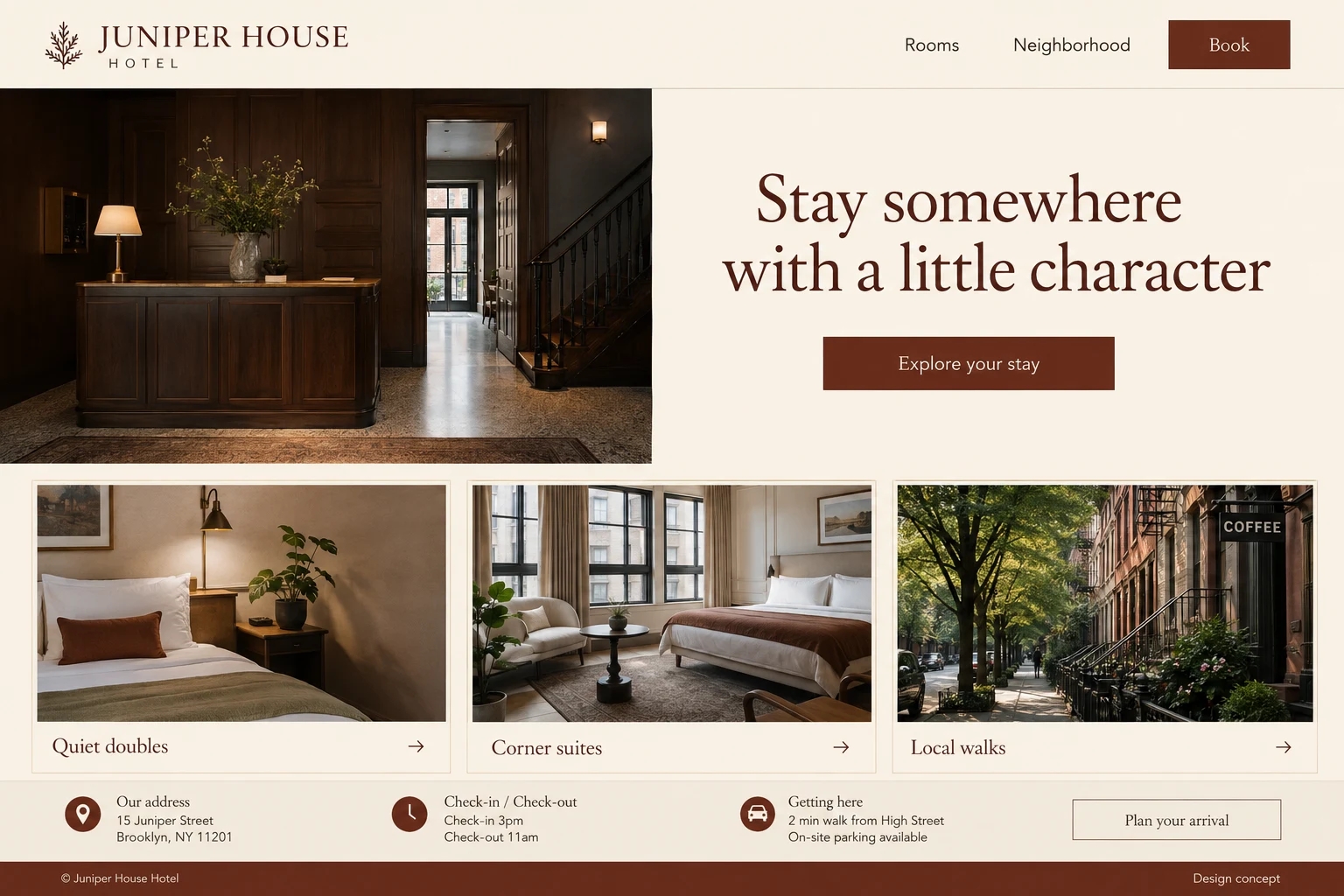
This AI-generated website concept illustrates a fictional business. It is not a completed customer project. Features shown here need to be discussed and scoped for your business.