
Food & Hospitality
Event Venue Web Design
People choosing an event venue are trying to imagine a day that does not exist yet.
People choosing an event venue are trying to imagine a day that does not exist yet. They need to know where guests arrive, where the main activity happens, and what has to be arranged around it. A website can make that imagining practical through clear layouts, honest photographs, and explicit responsibilities.
Give the rooms context
Show each space with photographs and verified details about how it can be used. Label seating or reception configurations rather than presenting a single capacity figure without explanation. A floor plan helps organizers understand connections between rooms, but it should be readable on a phone and supported by text describing the important relationships.
Separate the space from the event setup
A photograph may include hired furniture, outside catering, or decorations brought by a previous organizer. Explain what the venue itself supplies and what requires a separate arrangement. Use current information about equipment, setup windows, supplier access, and cleanup. Those details can prevent an attractive gallery from creating inaccurate expectations.
Make the tour request purposeful
Collect a proposed date, event type, guest count, and the spaces of interest. Allow an organizer to say that some details are still undecided. Explain what the team reviews before offering a tour or confirming availability. The website should support a conversation about fit, not imply that every date or event format can be accommodated.
Answer arrival questions for different visitors
Guests need directions, parking, and entrance information. Suppliers may need loading and setup details. Keep those routes clear and publish only information the venue has verified. Describe facilities specifically so organizers can discuss individual requirements with the venue before making decisions.
For launch, assemble room measurements, configuration examples, current photographs, equipment lists, and the team's most common planning questions. Ask someone new to the venue to shortlist a room for a meeting and then for a private celebration. Notice where the same information needs a different explanation.
Review tour inquiries by occasion, questions about inclusions, and the proportion of requests that fit the venue's capacity and schedule. Traffic is only one part of the picture. A useful site helps people understand what the venue can realistically support, making the first tour a more informed discussion about the event rather than a correction of assumptions.
A design concept for Event Venue
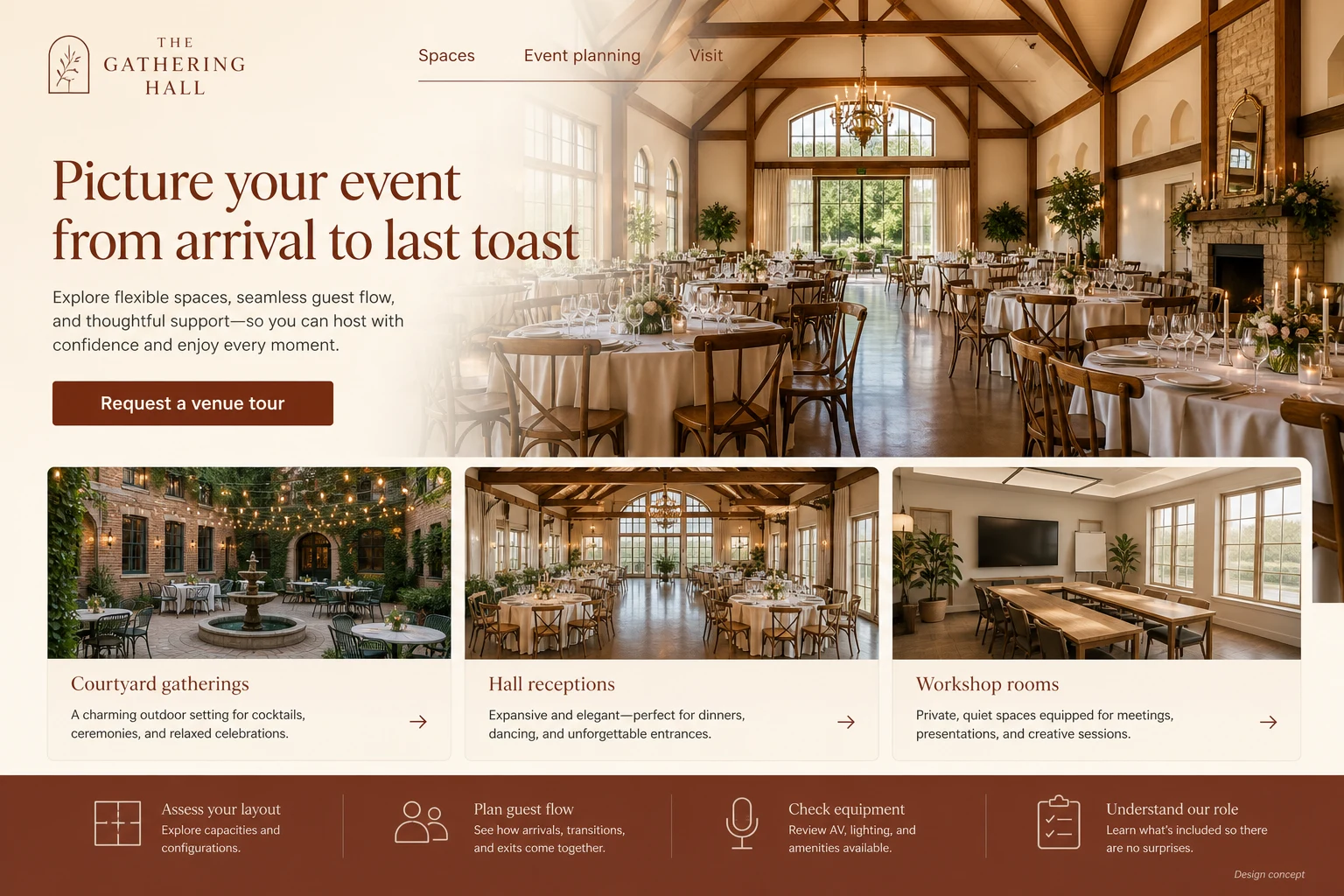
This AI-generated website concept illustrates a fictional business. It is not a completed customer project. Features shown here need to be discussed and scoped for your business.