
Food & Hospitality
Brewery Web Design
People planning a brewery visit need more than a logo and a row of cans.
People planning a brewery visit need more than a logo and a row of cans. They are working out whether the taproom fits their afternoon: what is available, whether they can eat, who is coming with them, and whether an event changes the usual setup. Build the site around that real planning process.
Lead with a visit people can picture
Use photographs of the taproom, entrance, and seating during ordinary service. Put hours and directions where mobile visitors can find them quickly. Explain the food arrangement clearly, especially when it depends on a changing truck schedule. Publish the brewery's actual guest policies and practical access details rather than relying on assumptions.
Keep current pours distinct from the archive
A beer library can tell an interesting story, but it is not the same as today's tap list. Label the two clearly. Current availability needs an update routine and descriptions approved by the brewery. If a particular pour is not guaranteed to remain available, avoid language that suggests a visitor can count on it all week.
Make events easy to act on
Give every gathering its own date, time, participation details, and booking destination where needed. A music listing without a date is decoration, not planning information. For private or group events, ask for the intended day, approximate size, and occasion. Explain that an inquiry still needs an availability review when that is the business's process.
Choose commerce features deliberately
An online shop might focus on merchandise, while the main website supports taproom visits. Do not build a shipped-alcohol journey by assumption. Start with the brewery's real operating model and the arrangements it has reviewed for any sales channel. Keep store actions separate enough that someone looking for tonight's food truck does not get lost in product categories.
Before launch, collect current operating hours, food contacts, tap descriptions, event information, and a concise photo list. Assign an owner to each changing section. Test a normal visit and an event visit on a phone, including the final handoff to tickets or reservations.
Useful measures include map clicks, event booking completion, and the quality of group inquiries. Ask the taproom team what visitors misunderstood before arriving. Those comments often reveal whether the website needs clearer food information, more visible hours, or a better explanation of the event schedule.
A design concept for Brewery
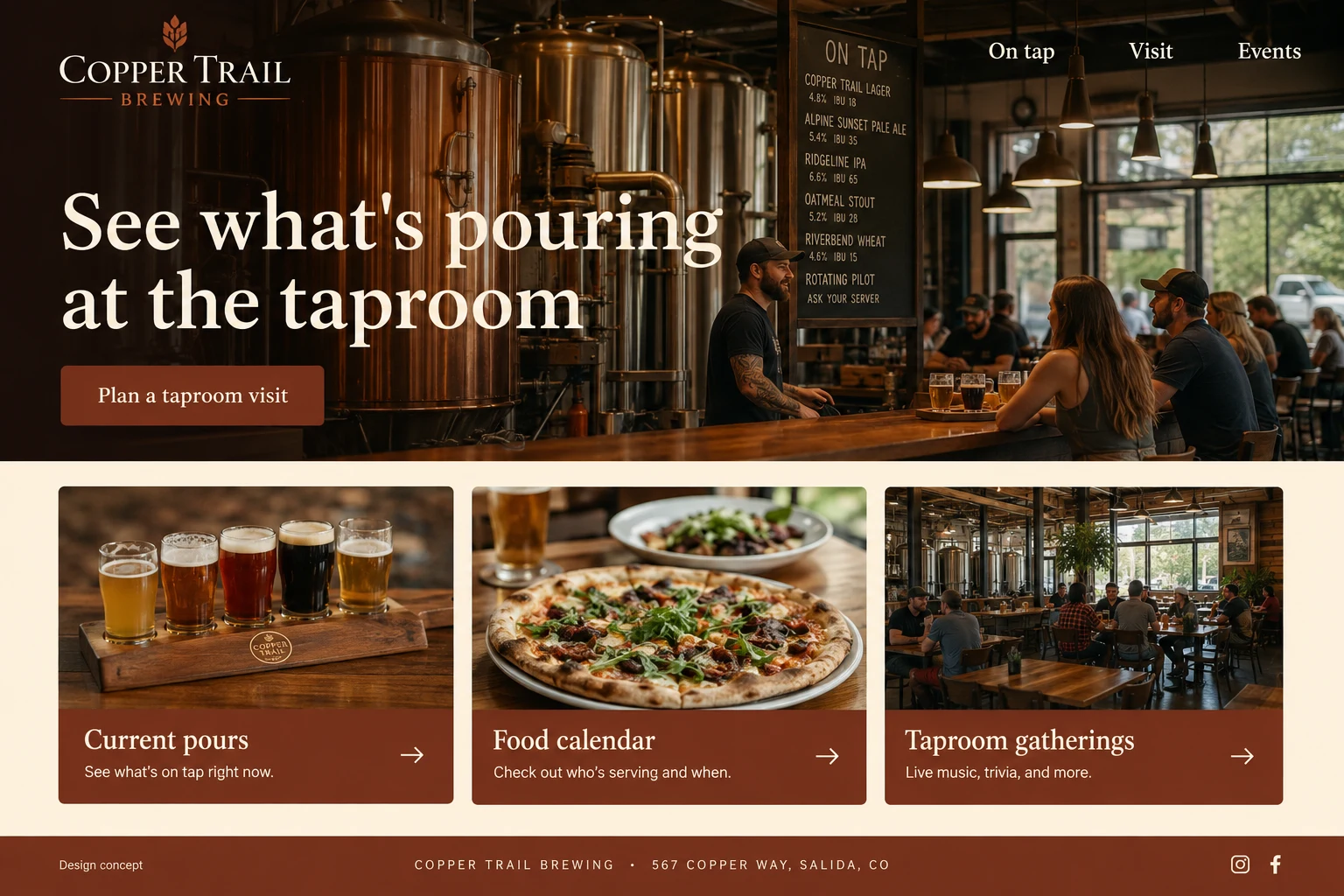
This AI-generated website concept illustrates a fictional business. It is not a completed customer project. Features shown here need to be discussed and scoped for your business.