
Retail & eCommerce
Toy Store Web Design
A toy-store website should help an adult imagine the play, not just admire a colorful box.
A toy-store website should help an adult imagine the play, not just admire a colorful box. Someone buying for a niece, a friend, or their own child needs to understand what is included, how the toy is used, and which product guidance matters before choosing it.
Give shoppers more than an age filter
Use the manufacturer's current age information, but also organize around activities such as making, building, storytelling, or solving puzzles. Describe the kind of interaction the toy supports using verified product details. Avoid promising that a particular purchase will make every child more advanced or hold their attention for a fixed amount of time.
Make the contents concrete
Show the actual pieces, dimensions, and included materials. State whether extra items are needed before play can begin. A shopper should not discover on gift day that a required accessory was only pictured, not supplied. Keep important package guidance readable and easy to find rather than depending on visitors to enlarge an image.
Use photographs to explain scale
A close-up can show texture or detail, while a wider image helps buyers understand size. Label sets and individual items clearly. If multiple products appear together, identify which one the page sells. Simple accuracy here can prevent more confusion than a large gallery of decorative scenes.
Help the gift reach the right place
Publish current dispatch, delivery, collection, and return arrangements. If the store offers wrapping or a message, show how customers select and review those details. A gift buyer with a deadline needs realistic timing information and a way to ask a question when the standard options do not answer it.
Before launch, collect reliable product records, package contents, age guidance, warnings, dimensions, and real images. Test a first-time buyer's journey through choosing a puzzle, checking what is in the box, and arranging delivery to another household.
Track questions about required accessories, product size, and gift presentation alongside completed orders. Look at returns or support requests caused by inaccurate expectations. The website is helping when buyers can explain what they selected and why it suits the intended activity, while understanding that a child's response to a toy is personal rather than something the store can guarantee.
A design concept for Toy Store
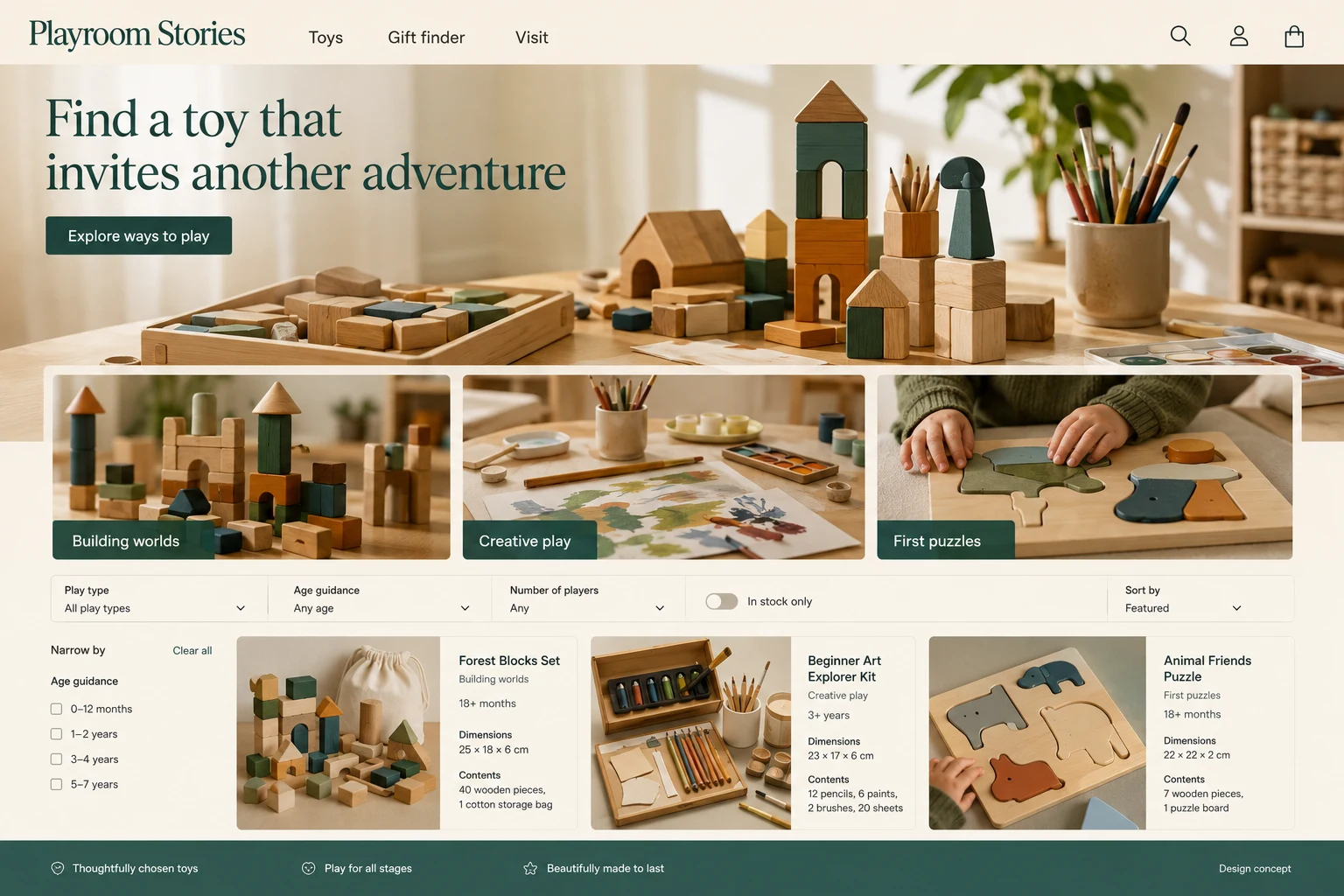
This AI-generated website concept illustrates a fictional business. It is not a completed customer project. Features shown here need to be discussed and scoped for your business.