
Food & Hospitality
Restaurant Web Design
Think of a restaurant homepage as the host's first conversation with a guest.
Think of a restaurant homepage as the host's first conversation with a guest. Before anyone asks for a table, they want to know what is cooking, whether the place feels right, and how the evening will work. The website should answer those questions in the order people naturally ask them.
Build around three kinds of guest
A returning customer may only need the ordering link. A first-time diner needs the menu and a feel for the room. Someone planning a birthday needs group information and a way to talk through details. Give those journeys obvious starting points, with labels such as Menu, Book a Table, and Private Dining. Clever navigation names add work at exactly the wrong moment.
Keep menu decisions easy
Use text that visitors can enlarge and read without downloading a file. Include useful dish descriptions and show when each menu is served. If the kitchen provides dietary information, keep it accurate and explain how to discuss individual requirements. Avoid letting an old PDF disagree with the page menu. One person should know which version is the source of truth.
Photograph the whole experience
Plan a small, purposeful photo list: the entrance guests should use, the dining room in normal service, a few representative dishes, and any distinct seating areas. Accompany the images with practical details about arrival and opening times. A beautiful empty room does not explain whether a large party needs to book differently or whether the kitchen closes before the venue does.
Test the table-to-confirmation route
Walk through a booking as a visitor would, including the handoff to an outside reservation provider. Make the difference between an inquiry and a confirmed reservation obvious. For takeaway, check that the correct ordering destination opens and that collection instructions remain easy to find afterward.
Keep a short maintenance checklist: menu changes, holiday hours, booking links, event details, and contact information. Then watch which visits reach the reservation service, which generate calls, and where people abandon the process. Compare those signals with actual bookings when the systems allow it. Traffic alone cannot show whether more people sat down for dinner, but repeated questions and failed booking attempts can tell you exactly what to improve next.
A design concept for Restaurant
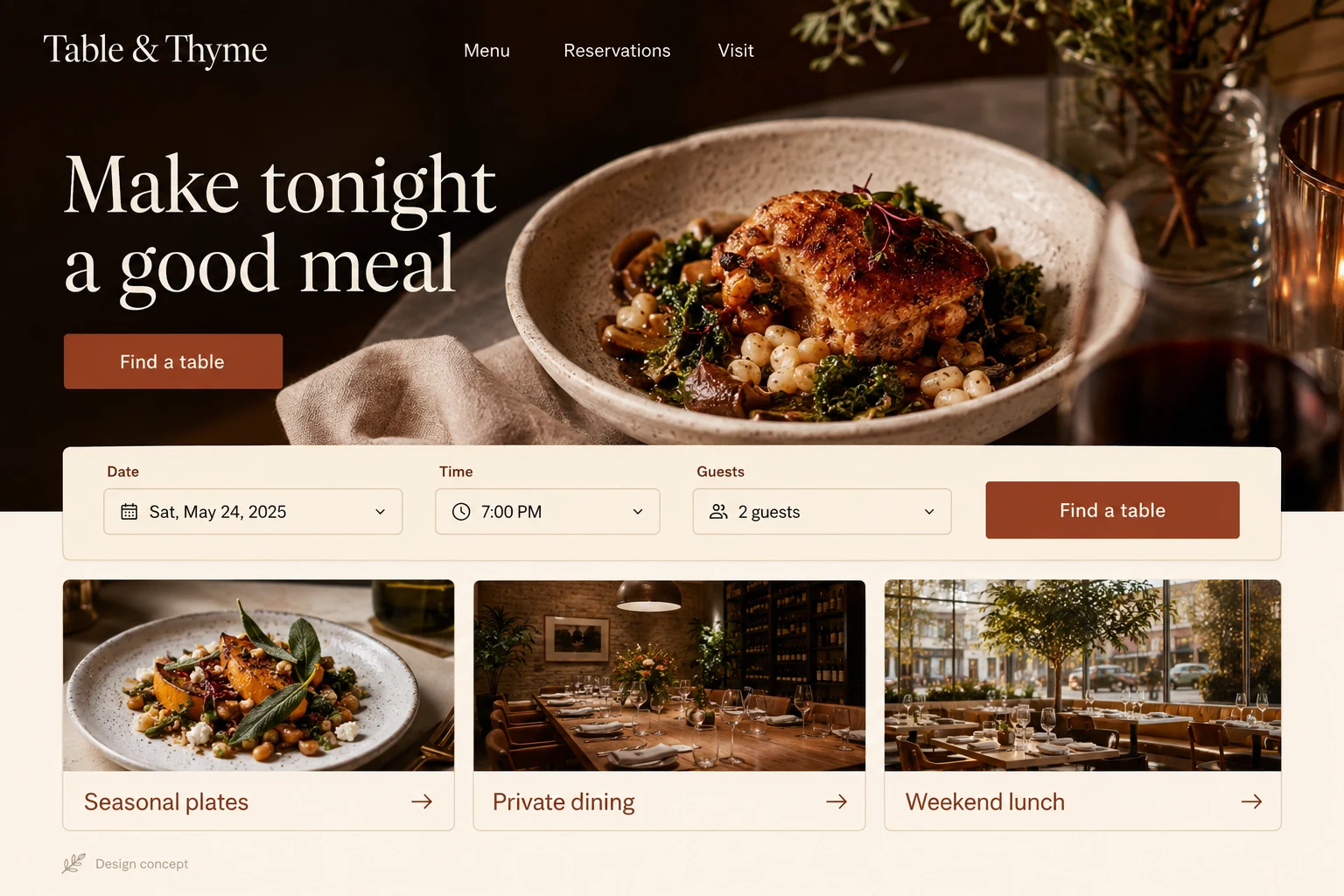
This AI-generated website concept illustrates a fictional business. It is not a completed customer project. Features shown here need to be discussed and scoped for your business.