
State eCommerce
Indiana eCommerce Web Design (IN)
A small workshop project can require only a few new supplies, yet a large tool catalog makes the choice feel bigger.
A small workshop project can require only a few new supplies, yet a large tool catalog makes the choice feel bigger. For an Indiana store concept, an example wall shelf becomes a focused route to the clamps, consumables, and measuring accessories used in that project.
Start with the project assumptions
Show the sample shelf with its dimensions and a clear list of the tasks being discussed. The shopping page should identify the materials and equipment assumed by the example. It is not a substitute for complete construction instructions. Keep tool purchases separate from consumables so a customer who already has a working setup can find only the missing items.
Explain the job of each accessory
A clamping pad, sanding disc, and guide attachment solve different problems. Use close photographs and plain descriptions of their intended roles. For a sanding product, show size, grit, attachment, hole pattern, and pack quantity. For an accessory that depends on a tool model, provide the confirmed compatibility information. Do not let an attractive project photo suggest that every listed item fits every workshop.
Make the basket easy to inspect
Offer individual links and an editable project list rather than a bundle whose contents are hidden. Show selected variants in the cart with enough detail to recognize them. A shopper should not need to remember which of several similar disc packs they chose. If a component becomes unavailable, remove the suggestion or explain the replacement instead of silently substituting a different specification.
- List assumed equipment before the products.
- Show compatibility near each relevant choice.
- Separate pack quantities from item dimensions.
- Keep project extras clearly optional.
Review the questions behind abandoned baskets
Track visits from the project page, variant changes, and orders. Staff can note whether inquiries concern compatibility, quantity, or the project itself. That distinction tells the merchant whether to improve product data or the introductory explanation. A website cannot assess a customer’s tools, materials, or technique from a shopping session. This Indiana example therefore keeps the purchase guidance specific and the project claims restrained. Its purpose is to help a customer assemble an understandable supply list, check each item, and recognize where more detailed instructions are still needed.
A design concept for Indiana
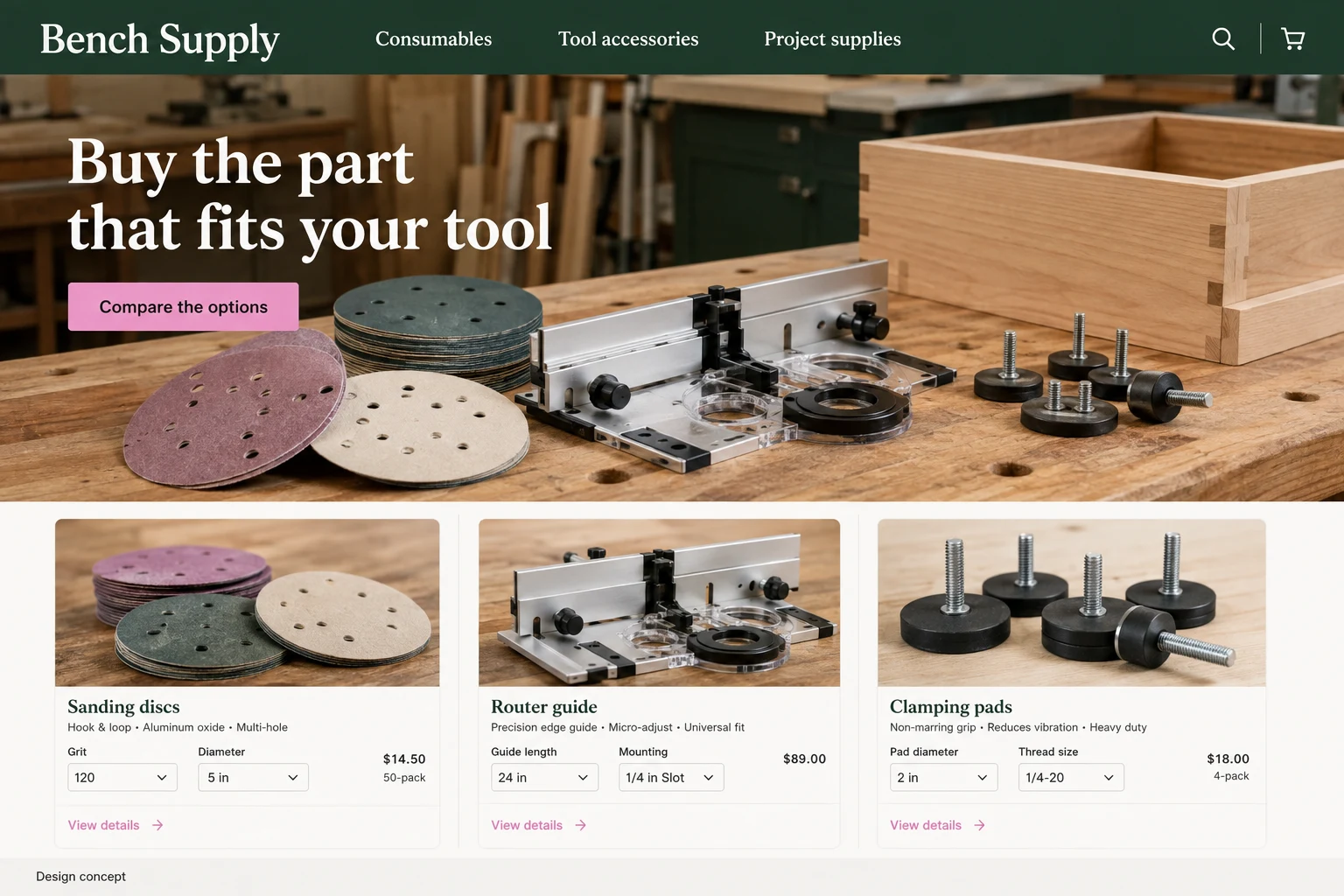
This AI-generated website concept illustrates a fictional business. It is not a completed customer project. Features shown here need to be discussed and scoped for your business.