
Retail & eCommerce
Bookstore Web Design
A bookstore's website should feel like a place where someone can both find a known title and discover an unexpected one.
A bookstore's website should feel like a place where someone can both find a known title and discover an unexpected one. That requires two kinds of clarity: accurate catalog information for purposeful searches and thoughtful recommendations for readers who are still deciding.
Make exact-title shopping dependable
Give each book clear author, title, format, and edition information, using the store's reliable product records. Keep cover images matched to the version offered. Where multiple editions exist, explain the choices in a way a reader can compare. Someone buying a required course text should not have to infer the edition from a small cover thumbnail.
Let the booksellers' voices be useful
Staff recommendations can describe the reading experience, likely interests, or a reason the book stayed with the reader. Keep those notes original and concise. Do not reuse publisher descriptions as if they were personal staff opinions. Link recommendation collections to current product information so a discovery can lead naturally to an available purchase or request.
Explain what availability means
Differentiate stock on hand, online availability, and special-order possibilities according to the shop's actual systems. A request for an uncommon title should collect enough identifying information for a useful search. Tell the customer when availability and timing still need confirmation. Clear language helps the store avoid disappointing someone who assumed a requested book was already waiting.
Keep events connected to the shop
Author visits and reading groups need dated listings, practical arrival details, and a clear participation route. Archive old events without leaving them at the top of the calendar. Place opening hours, directions, and collection instructions where readers can find them from both the catalog and event pages.
For launch, gather reliable book records, approved cover images, staff-pick copy, inventory definitions, and the current event schedule. Test finding a specific paperback, exploring a recommendation, and requesting a book that is not listed.
Review search terms with no useful results, special-order inquiries, completed purchases, and event participation where measurable. Those signals show different needs. A strong bookstore site does not have to imitate an enormous catalog; it needs to make the shop's real selection, knowledge, and ordering process easy for readers to understand.
A design concept for Bookstore
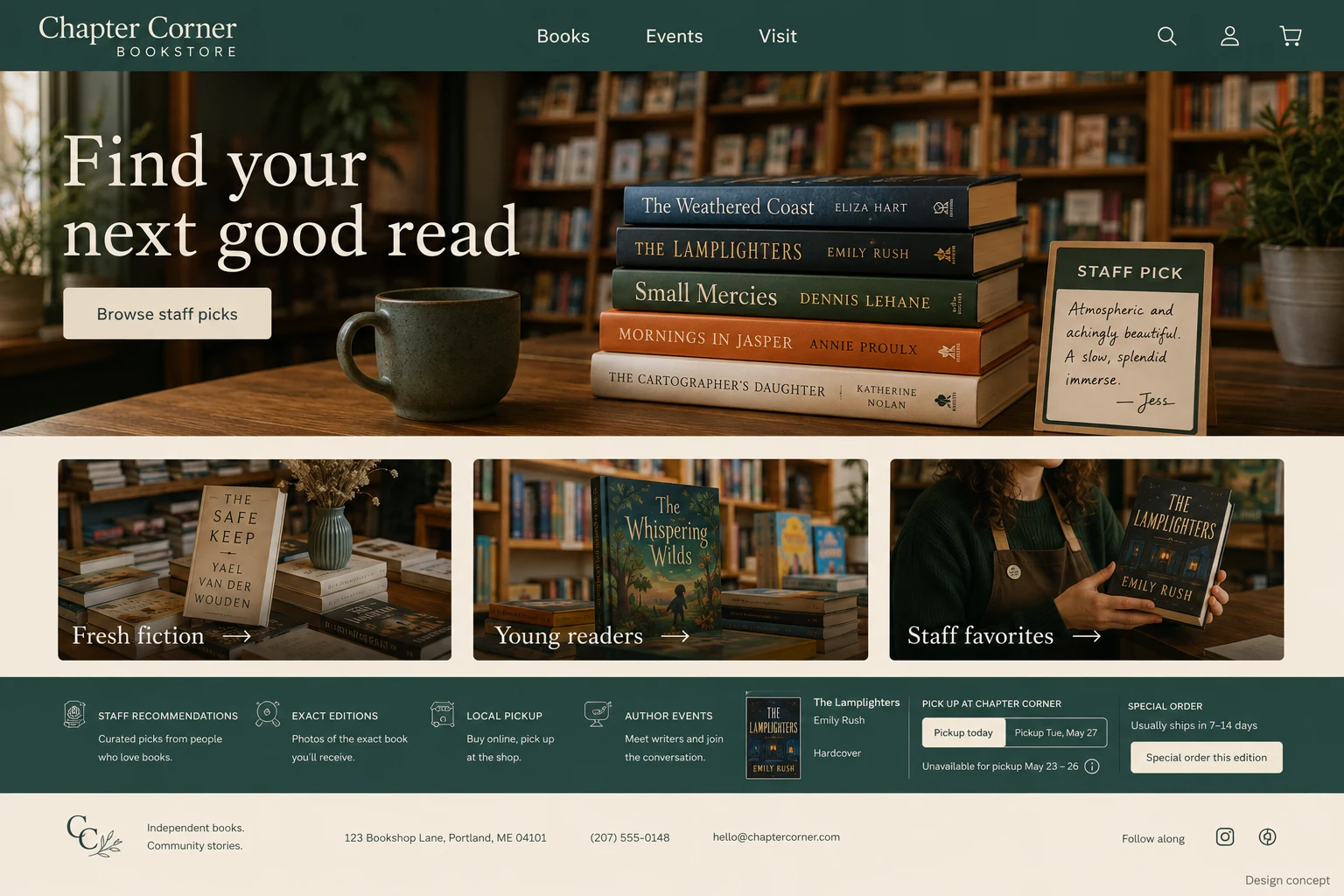
This AI-generated website concept illustrates a fictional business. It is not a completed customer project. Features shown here need to be discussed and scoped for your business.