
Food & Hospitality
Campground Web Design
Before a camper falls in love with the view, they need to know whether their tent, trailer, or travel plans fit the campground.
Before a camper falls in love with the view, they need to know whether their tent, trailer, or travel plans fit the campground. The website should make that assessment possible without a string of phone calls. Clear site information can be welcoming in its own right because it lets people plan with less guesswork.
Build around the way people camp
Create separate routes for the accommodation types actually available. An RV visitor may need dimensions and hookup information; a tent camper may care more about surface, parking distance, and shared facilities. Give each route verified details and photographs that represent the relevant area. Label individual-site images accurately when bookings are site-specific.
Turn the map into a planning tool
Show the relationship between pitches, reception, washrooms, water, and other shared spaces. Keep the map legible on a phone and provide key information in text as well. Explain any seasonal facility changes. A beautiful illustrated map should not require visitors to guess where they check in or how far equipment must be carried.
Explain arrival before the booking is finished
Use the operator's current check-in arrangements, arrival windows, and route guidance. Publish practical rules where they affect the decision to stay. If guests need to discuss vehicle access or another constraint, give them an obvious contact route. Do not rely on a post-booking message to reveal details that could make a site unsuitable.
Keep availability and expectations aligned
Check that the reservation flow carries the chosen dates and site category into the next step. Where the business reviews requests manually, ask for the camping setup and explain when confirmation happens. Temporary closures or unavailable facilities should be reflected in the information visitors see before requesting a stay.
For launch, gather measured site details, current amenity information, area photos, a usable map, and the booking team's usual questions. Test the site with one person planning a simple tent trip and another traveling with a larger vehicle.
Review completed reservations, inquiries requiring site-fit clarification, and questions about shared facilities. Look at those patterns by accommodation type rather than treating every visitor the same. The strongest campground pages help people choose a place that matches their setup and understand how to make the first day of the trip go smoothly.
A design concept for Campground
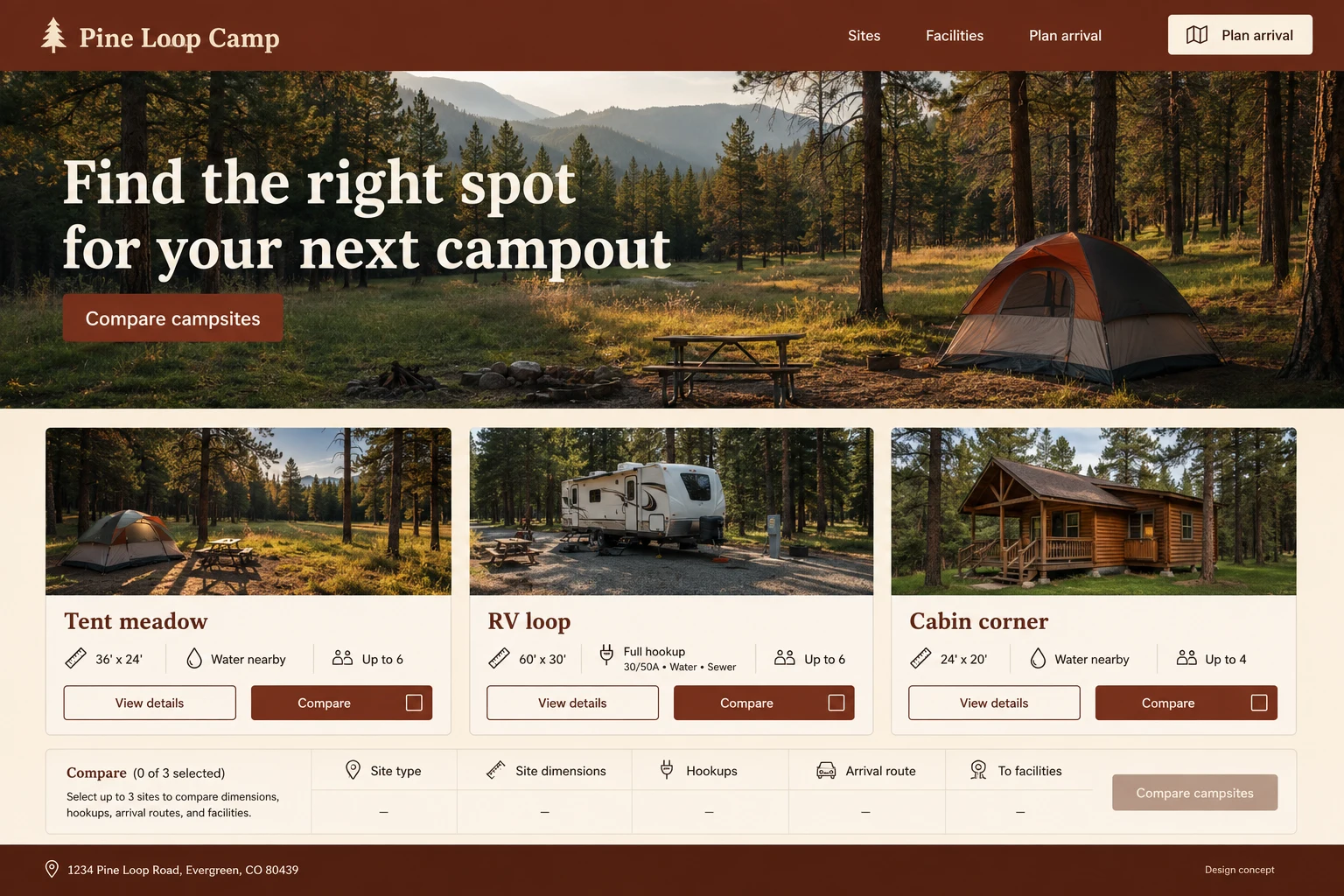
This AI-generated website concept illustrates a fictional business. It is not a completed customer project. Features shown here need to be discussed and scoped for your business.