
Food & Hospitality
Winery Web Design
A winery website should help someone plan the afternoon, not just admire the landscape.
A winery website should help someone plan the afternoon, not just admire the landscape. Visitors need to know which tasting experience suits them, how reservations work, and what practical details could affect the trip. The story of the winery matters more when those basics are already easy to find.
Give each experience a clear identity
Show the actual tasting options with direct descriptions of the setting, format, and booking expectations. If one experience is seated and another follows a different structure, explain the difference. Avoid making visitors interpret a poetic title to work out what they are booking. Seasonal experiences should carry visible dates and current availability information.
Make arrival feel familiar
Use images of the entrance, tasting room, and any guest areas the winery wants to feature. Place directions, parking information, and relevant guest policies together. Explain food arrangements using current facts. When describing facilities, offer concrete details the team has checked rather than broad promises about suitability for every visitor.
Keep booking and inquiry language honest
The main tasting action should lead to the correct availability or reservation destination. A separate group route can collect the proposed date, group size, experience preference, and timing questions. Tell visitors when a request still needs review. A confirmation screen should reflect what the system actually did, whether that was reserving a place or merely sending the team a message.
Connect the wines to the visit
Wine pages can introduce the current range and help guests remember what interested them. Use accurate information from the winery and remove stale details when selections change. If the site also sells products, the shopping flow should follow the business's real sales model. Do not treat shipping capabilities as an automatic part of a winery design brief.
Gather experience descriptions, property photographs, operational policies, booking links, and the seasonal update calendar before building. Test with someone planning a first visit and someone coordinating friends. Notice where either person has to leave the website to find basic answers.
Track reservation handoffs, completed bookings when available, and questions received before a visit. Distinguish group interest from individual tasting traffic. A useful site helps people arrive with a realistic picture of their afternoon, giving the winery team fewer practical uncertainties to resolve at the door.
A design concept for Winery
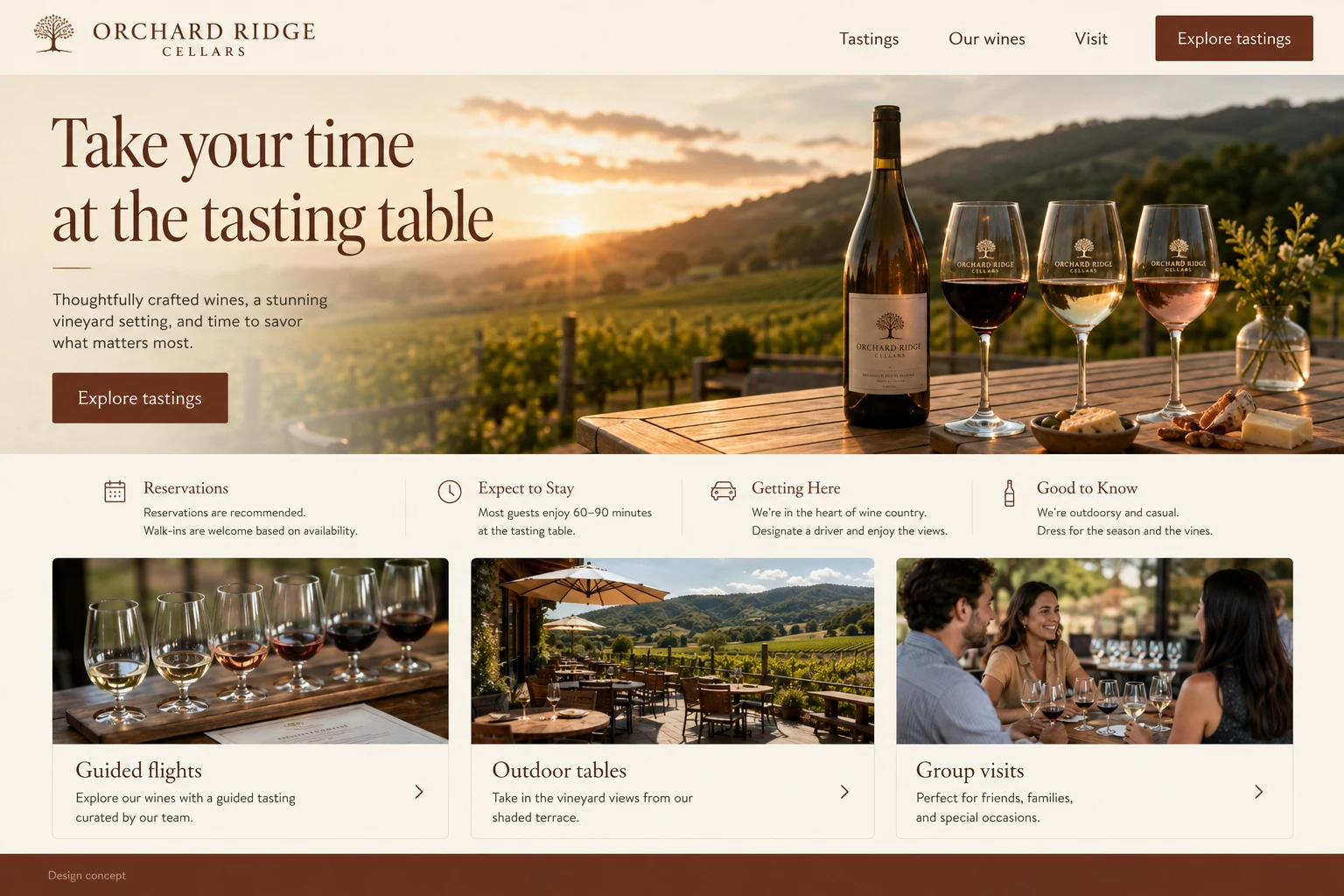
This AI-generated website concept illustrates a fictional business. It is not a completed customer project. Features shown here need to be discussed and scoped for your business.