
State eCommerce
Arkansas eCommerce Web Design (AR)
A first garden shopping trip can end with too many packets and no clear plan.

A first garden shopping trip can end with too many packets and no clear plan. Imagine an Arkansas retailer whose website helps a customer assemble one small raised-bed list. The experience should explain each purchase in relation to the space the customer has measured.
Turn the shopping list into a useful page
Begin with the bed dimensions, the example crops, and the assumptions behind the layout. Let shoppers read the entire plan before suggesting products. Each linked item should answer a specific need, such as seed, support, or a hand tool. A checklist that can be printed or saved is useful even to someone who buys only one missing item from the store.
Explain the units people will receive
Seed packet counts, tool dimensions, and trellis sizes should be expressed consistently. A product image with a small packet on a white background does not communicate how much is inside. Put the supplier’s quantity information in readable text and explain whether the displayed image represents the actual variety. Avoid presenting a planting illustration as a forecast of the customer’s eventual harvest.
Make substitutions understandable
When a seed variety is unavailable, suggest alternatives only with an explanation of the relevant differences. Do not silently substitute one product into a bundle. The buyer should be able to compare the variety description and supplier guidance, then decide. For tools, show dimensions and use photographs rather than relying on names such as compact or professional. Those words mean little without a reference point.
- Label every plan as an illustrative example.
- Include a printable list of selected items.
- Show optional tools outside the seed subtotal.
- Keep growing information tied to its source label.
Look for confusion before adding complexity
Review how often people open packet details, change suggested quantities, or ask about substitutions. Those signals can guide better explanations. A large interactive garden planner may be unnecessary if a measured diagram and clear product links solve the main problem. Keep the plan’s crop choices and supplier instructions visible beside the corresponding seed links. Real gardens differ, and a retailer’s website should not promise results it cannot control. Its practical contribution is a shopping list the customer understands, can edit, and can discuss with the merchant.
A design concept for Arkansas
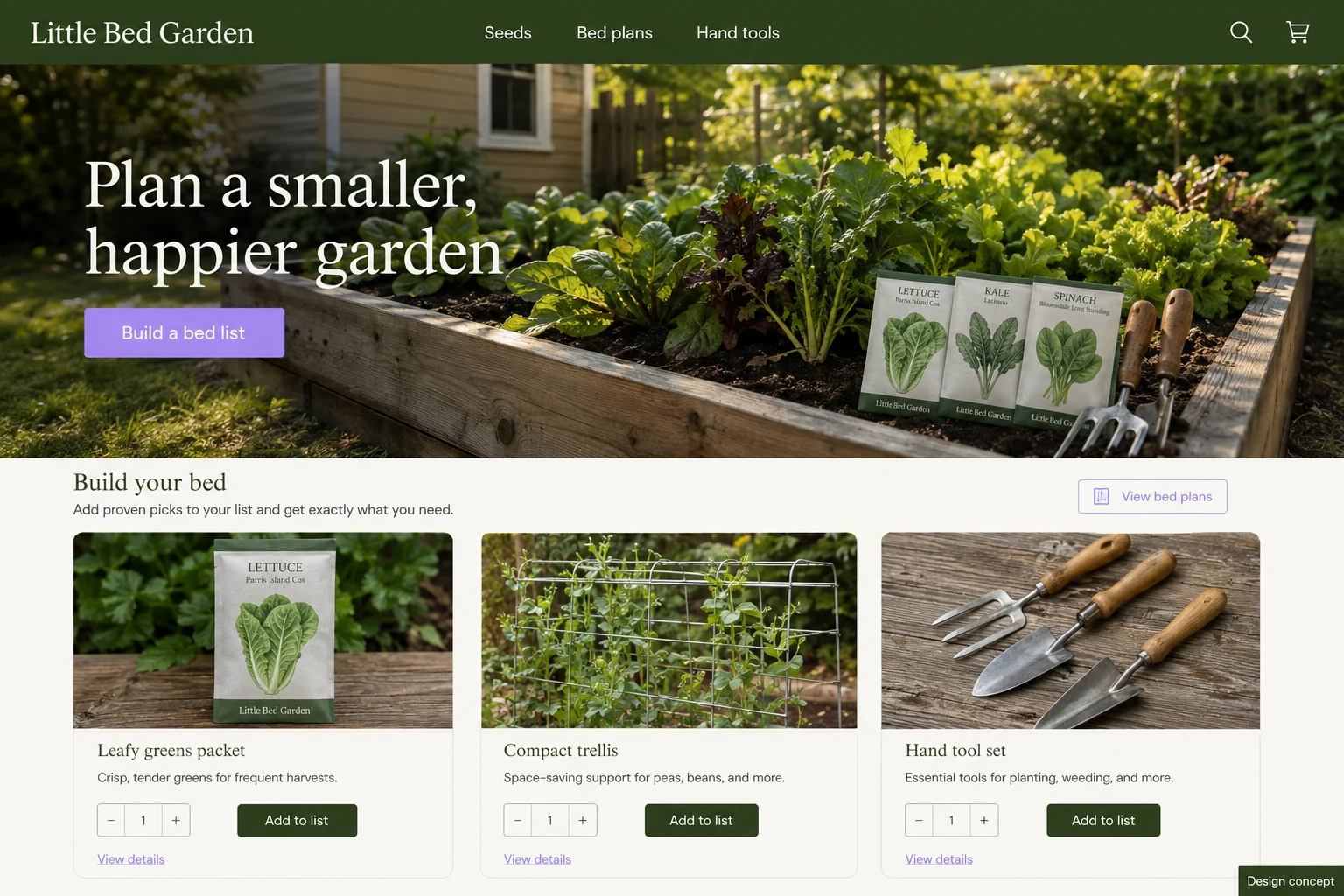
This AI-generated website concept illustrates a fictional business. It is not a completed customer project. Features shown here need to be discussed and scoped for your business.