
Construction & Home Services
HVAC Website Design
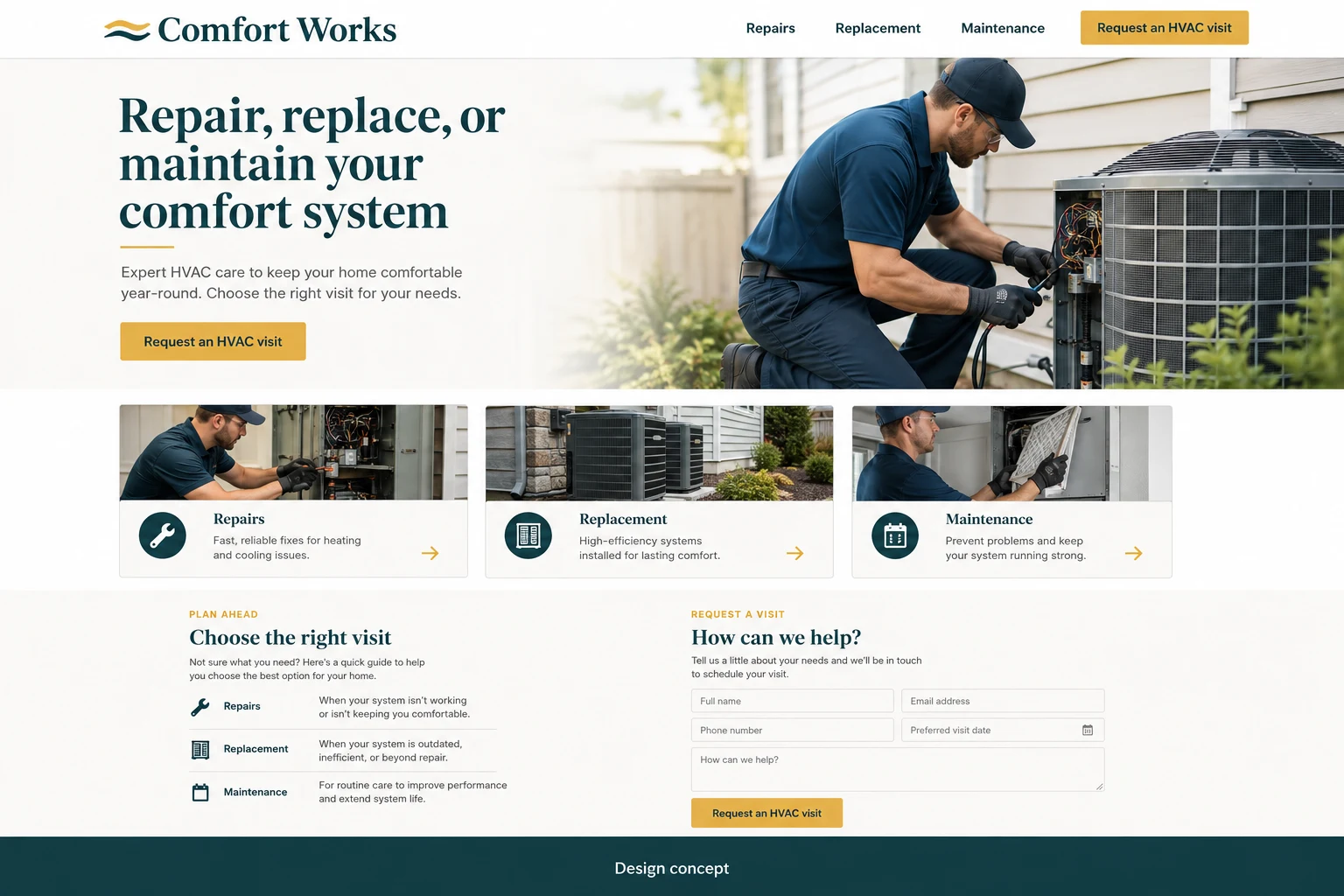
A useful HVAC homepage offers plain choices: solve a current problem, consider a new system, or discuss ongoing care.
Let visitors identify their immediate goal
A useful HVAC homepage offers plain choices: solve a current problem, consider a new system, or discuss ongoing care. Each page should answer the questions associated with that decision and show the relevant next step.
Explain assessment without overpromising
Describe the information a technician or project adviser needs before recommending work. A replacement case study might explain the starting arrangement and the owner's comfort priorities. Do not promise a particular saving or outcome simply because a product is featured.
Make the request practical on a phone
Use short fields for location, type of system if known, and what prompted the visit. Show contact hours and confirmation expectations. Keep lengthy equipment lists out of the first screen so someone can request help without searching for paperwork.
Keep the content useful after launch
Maintain accurate service coverage and review common appointment questions with the office. Track which service paths produce suitable inquiries and whether submitted requests receive follow-up. If visitors repeatedly choose the wrong category, rename the choices in the language customers actually use.
Use examples to set the right expectations
Show a fictional inquiry example for each route: an owner describing uneven comfort, someone considering replacement during a renovation, and a customer asking about regular care. Clearly label these as examples rather than testimonials. Explain which details help the first reply and which can wait for assessment. Place service-area information beside the contact action so visitors can check fit early. When reviewing performance, compare suitable inquiries with follow-up outcomes and note whether the same unanswered question appears across calls, forms, and project discussions.