
Retail & eCommerce
Handmade Goods Seller Web Design
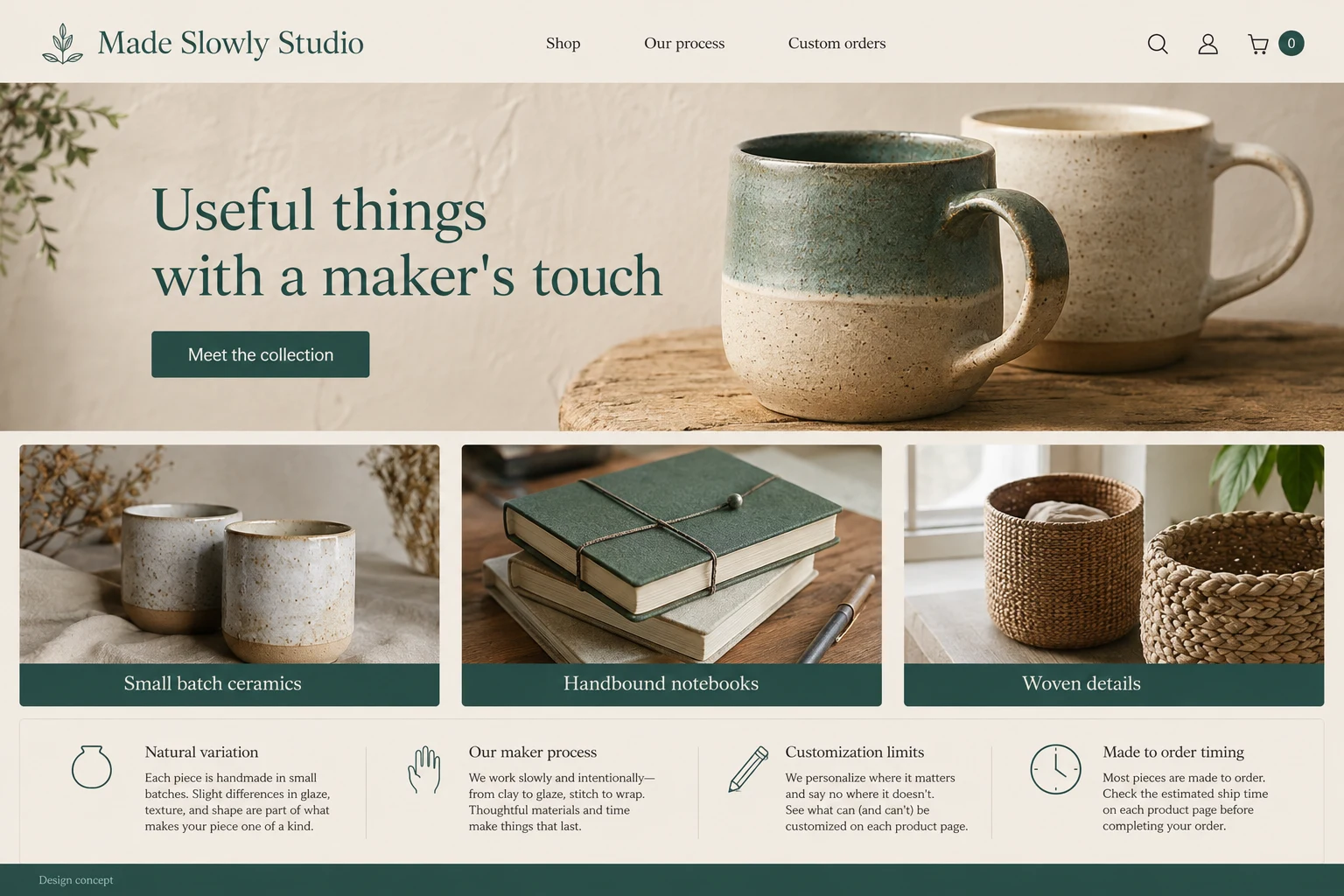
A handmade shop can invite customers into the maker's world while still giving them a straightforward buying experience.
A handmade shop can invite customers into the maker's world while still giving them a straightforward buying experience. The story matters, but so do the measurements, materials, and the difference between an item on the shelf and one that has yet to be made.
Give each piece concrete details
Show the object clearly, including its scale, texture, and useful angles. Put dimensions and materials in readable text. Explain natural or handmade variation with specific examples of what may differ. That gives customers a realistic picture without suggesting that variation excuses an unclear description.
Use the workshop story selectively
A few real images and concise notes can explain the maker's process. Connect that process to the product where it helps a buyer understand preparation, finish, or care. Keep the purchase controls easy to reach for someone who already knows what they want.
Make availability meaningful
Label ready-to-send stock separately from work produced after ordering. Publish the maker's actual preparation expectations and explain which choices are available. Custom requests should collect the intended use, relevant dimensions, preferences, and timing, with a clear explanation that the maker reviews the idea before agreeing to it.
Plan the parcel and the aftercare
Describe packaging contents, care guidance, and the shop's current fulfillment and return arrangements. Explain gift options only where they are actually offered. A customer buying a fragile or unusual object should understand how it arrives and what the maker recommends after unpacking.
Before launch, gather current product records, photographs, production timing, care instructions, and custom-order questions. Ask a visitor to distinguish a stock purchase from a commissioned piece using the website alone.
Track questions about variation, order timing, and customization, then compare them with completed purchases. Those signals show where a clearer explanation could save several messages. The site should make handmade work more understandable without flattening the individual character that drew the customer to it.